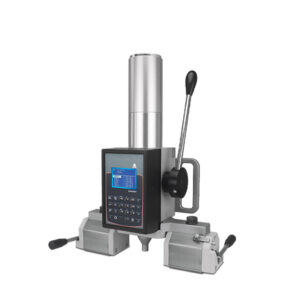
Automatic and Motorized bench Rockwell and Superficial Rockwell hardness tester with Brinell and Vickers additional scales
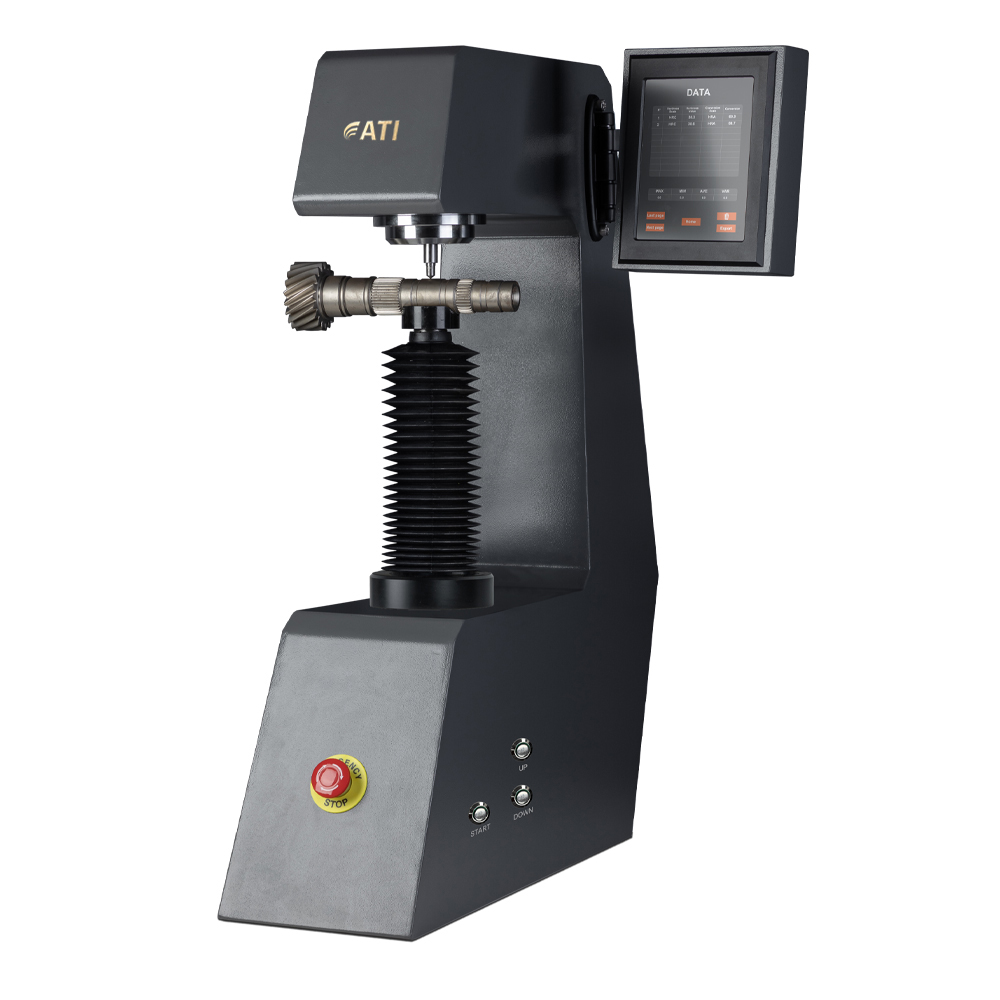
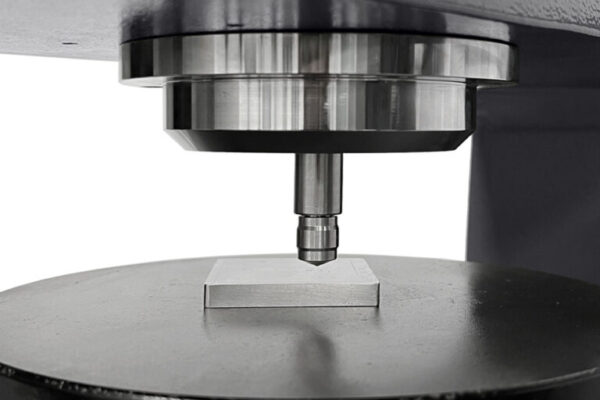
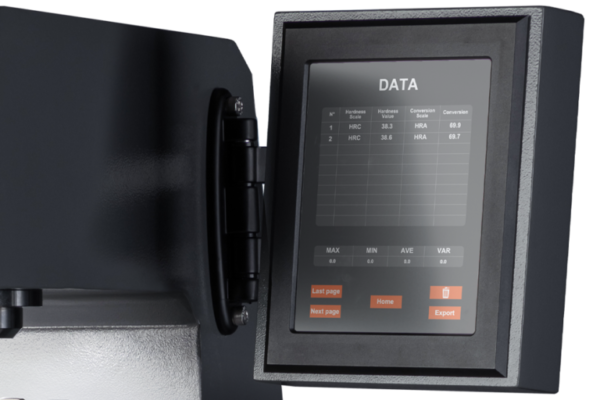
Motorized and Automatic Rockwell and Superficial Rockwell Hardness Tester, engineered to meet the rigorous standards set forth by ASTM E18, ISO 6508, and ISO 2039-2. This advanced testing instrument employs a high-precision load cell and Closed-Loop electronic control with a 1 KHz sampling rate, ensuring optimal accuracy and reliability.
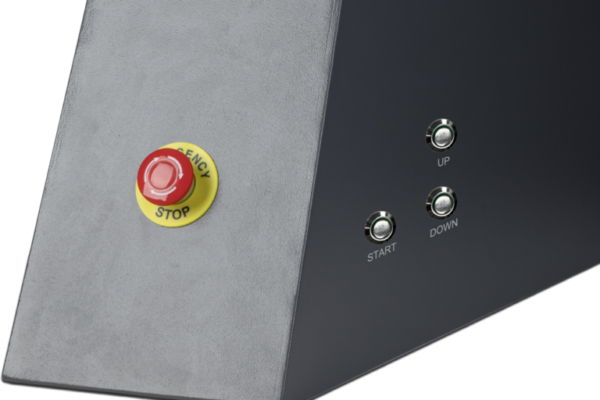
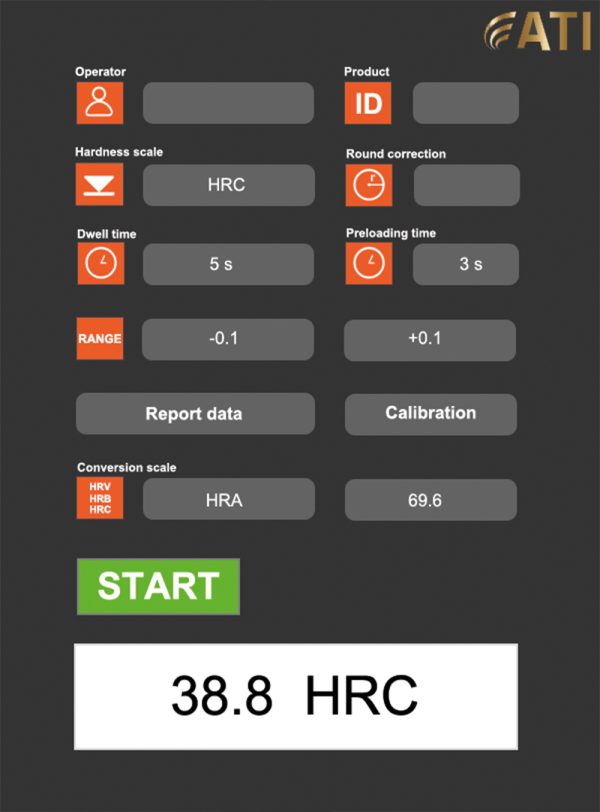
The automatic start test cycle is initiated with a single input command, streamlining the testing process and enhancing efficiency. ATI MRS is designed to accurately measure the hardness of ferrous, non-ferrous metals, and non-metal materials. Engineered for high accuracy, this tester meets the needs of manufacturers and engineers who require precise hardness measurements in critical applications.
Available Hardness Test Scales
| Rockwell Hardness Scales: | HRA, HRD, HRC, HRF, HRB, HRG, HRH, HRE, HRK, HRL, HRM, HRP, HRR, HRS, HRV, HRN, HRT, HRX, HRS, HRV |
| Superficial Rockwell Hardness Scales (15–30–45): | HRN, HRT, HRW, HRX, HRY |
| Brinell HBW Hardness Scales (Optional): | 1/1, 1/1.25, 1/2.5, 1/5, 1/10, 1/30 2.5/6.25, 2.5/15.62, 2.5/31.25, 2.5/62.5, 2.5/187.5 5/25, 5/31.25, 5/62.5, 5/125, 5/250 |
| Brinell HBWT Hardness Scales – Depth Measurement (Optional): | 2.5/62.5, 2.5/187.5, 5/250 |
| Vickers Hardness Scales (Optional): | HV1, HV2, HV3, HV5, HV10, HV20, HV30, HV50, HV100 |
Measurable materials and applications
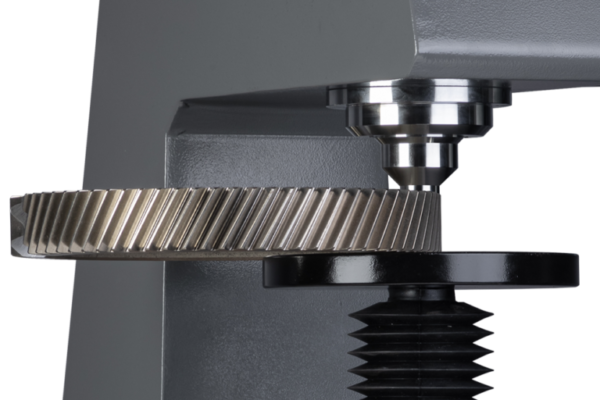
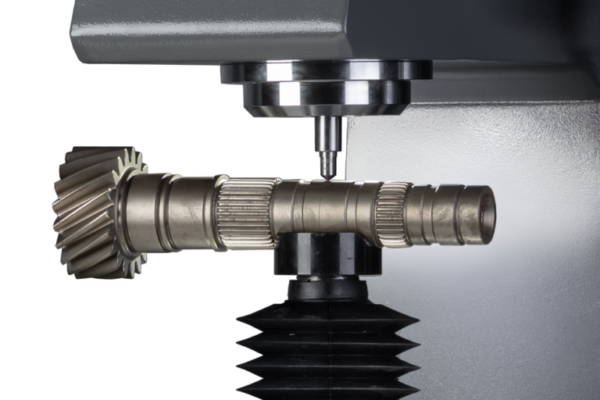
| Rockwell | Suitable for medium to thick metal components where fast and repeatable hardness measurements are required. Typical materials: carbon steel, alloy steel, stainless steel, tool steel, cast iron, copper, brass, bronze, aluminum alloys, nickel alloys. Typical applications: heat-treated steel parts, machined components, shafts, gears, forgings, incoming material inspection, production quality control. |
| Superficial Rockwell | Designed for thin materials, surface-hardened parts, and coatings where standard Rockwell loads could cause excessive penetration. Typical materials: thin steel sheets, hardened surface layers, carburized and nitrided components, plated parts, coated metals, light alloys. Typical applications: thin metal sheets, small precision parts, surface-treated components, quality control of coatings and shallow hardened layers. |
| Brinell Hardness Scales – HBWT (Depth Measurement) |
Ideal for testing softer metals and large components using depth measurement without optical evaluation. Typical materials: low-carbon steel, aluminum alloys, copper alloys, brass, bronze, soft cast iron. Typical applications: castings, forgings, bars, billets, structural components, production environments requiring fast and robust hardness testing. |
| Brinell Hardness Scales – HBW (Optical Measurement) |
Used for materials with coarse or heterogeneous microstructures where a larger indentation provides representative hardness values. Typical materials: cast iron, aluminum alloys, copper alloys, brass, bronze, non-ferrous metals. Typical applications: foundry products, large machined parts, raw materials inspection, metallurgical laboratories. |
| Vickers Hardness Scales | Suitable for a wide range of materials, from very soft to very hard, including small parts and thin sections when used with low test forces. Typical materials: hardened steel, stainless steel, non-ferrous metals, hard alloys, coatings, technical materials. Typical applications: laboratory testing, research and development, thin sections, small components, coating evaluation, failure analysis. |
Mechanical & Technical Specifications:
| Maximum Workpiece Height: | 270 mm |
| Throat Depth (Column to Indenter): | 210 mm |
| Dimensions (L x W x H): | 720 x 210 x 900 mm |
| Weight: | 77 kg |
| Power Supply: | AC 110V, 220V ±5%, 50~60Hz |
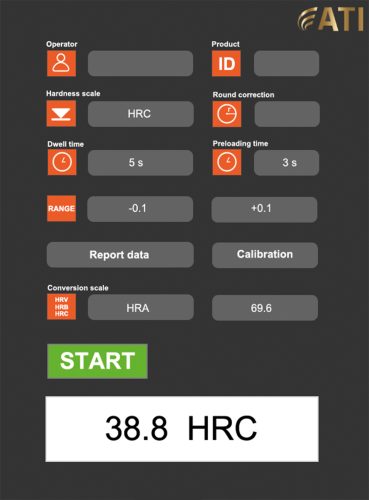
| Dwell Time: | Adjustable from 2 to 60 seconds |
RELATED HARDNESS TESTERS
ATI R / RS
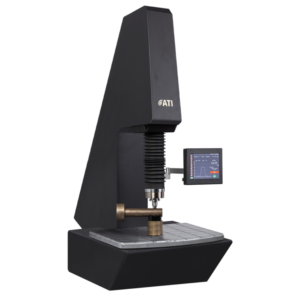
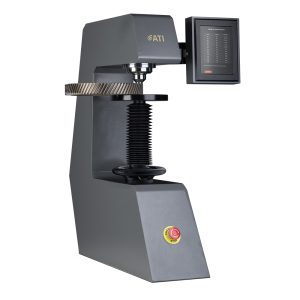
ROCKWELL HARDNESS TESTER – ATI R / RS Automatic bench Rockwell and Superficial Rockwell hardness…
See more

DAKOMASTER 300
Fully automatic hardness testing machine with test loads from 1 to 250 kgf. Rockwell, Superficial Rockwell and Brinell HBWT. Touchscreen PC and high level software.
See more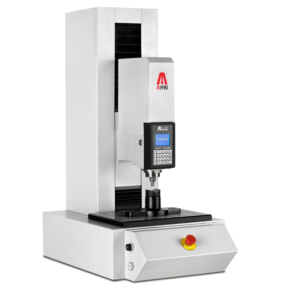

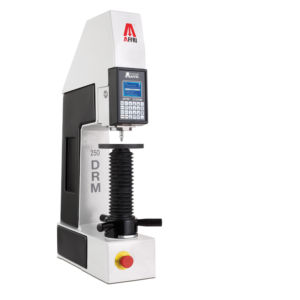
DRM / EX / RT
Semi-automatic very simple hardness testing machines with test loads from 3 to 250 kgf. Rockwell, Superficial Rockwell and Brinell HBWT. Suitable for small samples.
See more