DISCOVER OUR METALLOGRAPHIC GRINDING AND POLISHING MACHINES
With ATIPOL you can sand, polish and prepare the surface in a quick and optimized way for a perfectly reflecting surface.
With ATIPOL you can sand, polish and prepare the surface in a quick and optimized way for a perfectly reflecting surface.
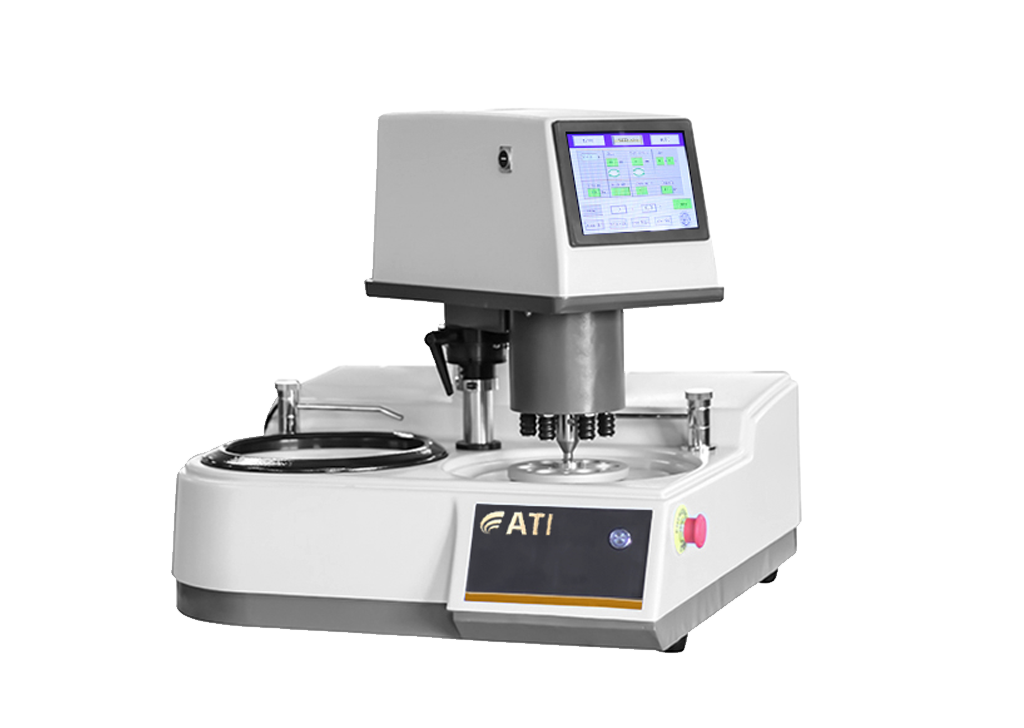
Automatic double-plate metallographic polishing machine
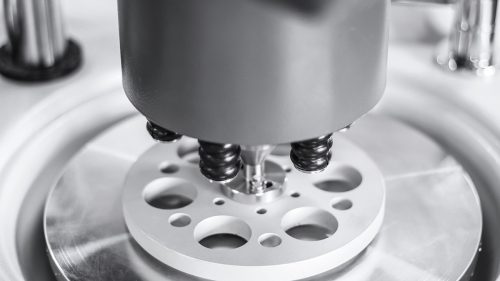
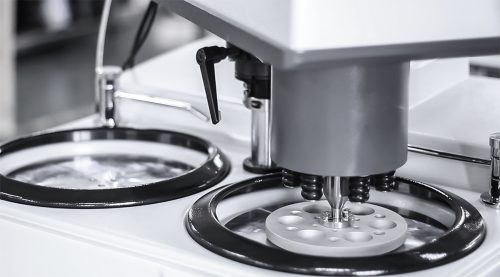
ATI POL-1000 Double is a fully computerized, PLC-controlled and AI-controlled, independently operating, double-plate metallographic polishing machine with a multifunction touch screen. Each plate can accommodate up to 6 samples, for a total of 12 individually programmable pressure points (6 + 6), independent for each disc. The rotation speeds can be programmed and memorized separately for each plate, with the option of clockwise and counterclockwise operation. The internal memory allows for the saving of up to 99 work cycles, each consisting of up to 10 parameters, which can be quickly recalled from the menu. In single-cycle mode, up to 30 parameters can be memorized. The machine offers a wide range of specimen holder discs, also available upon specific customer request. It is equipped with a moving head with magnetic locking, an adjustable flow liquid diffuser with automatic stop at the end of the cycle, and a magnetic disc for abrasive paper, compatible with any type of paper, both magnetic and adhesive. The special antistatic and self-cleaning treatment guarantees maximum efficiency even when using adhesive discs.
Model:
Disc diameter (mm):
Disc rotation speed:Grinding speed:
Grinding speed:
Time for sample preparation:
Loading force range:
Loading force mode:
Sample holder
Engine power:
Power supply:
Dimensions:
Weight:
ATI POL-1000 Double
Ø 254mm (Ø 230 and 203 mm at request) with magnetic system
50-1000 r/min (Forward and reverse rotation ca be switched) V1= 300 rpm, V2= 500 rpm, V3= 800 rpm
30-200 r/min
0-9999 seconds
30-200 N
Central loading
Ø 30mm for 6 samples (Ø40mm and Ø50mm at request)
0.75 W
110-220V / 50-60Hz
760 x 730 x 700 mm
74 Kg
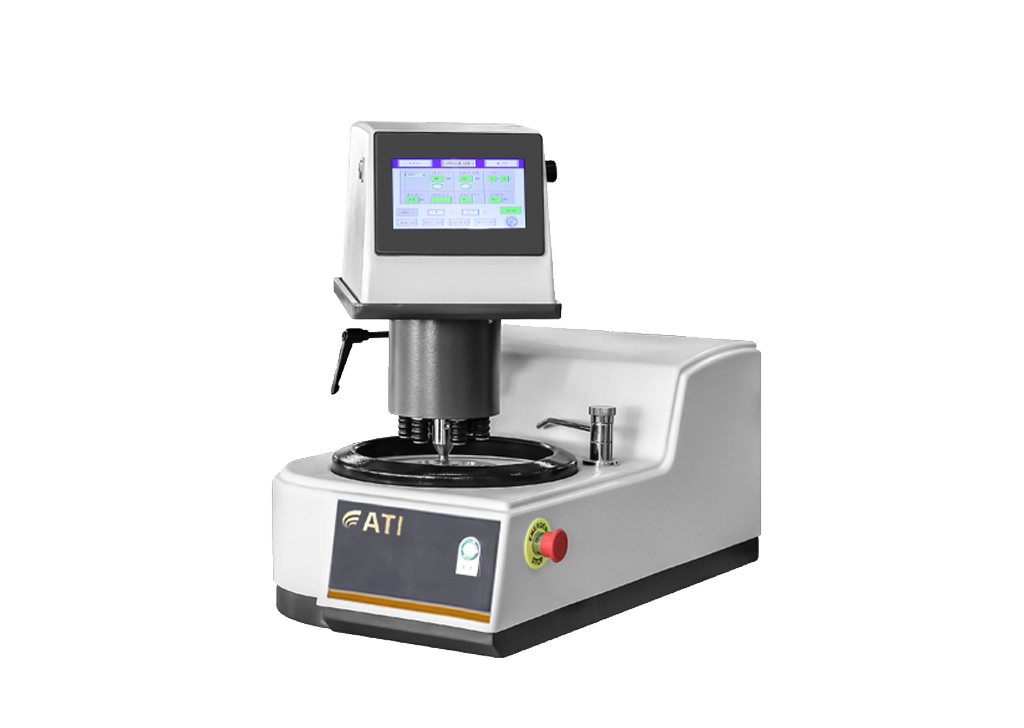
Automatic metallographic polishing machine
ATI POL-1000 is a computerized single-plate metallographic polishing machine, managed by PLC and AI, equipped with a multifunction touch screen. It can accommodate up to 6 samples simultaneously, with 6 individual and programmable pressure points. The rotation speeds can be set and saved independently for each disc, with both clockwise and counterclockwise operation. The internal memory allows for the storage of up to 99 work cycles, each consisting of up to 10 parameters, which can be quickly recalled from the menu. In single-cycle mode, up to 30 parameters can be stored. A wide range of specimen holder discs is available, including those customizable to customer specifications. The machine is equipped with a magnetically locked moving head, an adjustable-flow liquid diffuser with automatic stop at the end of the cycle, and a magnetic disc for abrasive paper, compatible with any type of paper, both magnetic and adhesive. The special antistatic and self-cleaning treatment ensures optimal performance even when using adhesive discs.
Model:
Disc diameter (mm):
Disc rotation speed:Grinding speed:
Grinding speed:
Time for sample preparation:
Loading force range:
Loading force mode:
Sample holder
Engine power:
Power supply:
Dimensions:
Weight:
ATI POL-1000
Ø 254mm (Ø 230 and 203 mm at request) with magnetic system
50-1000 r/min (Forward and reverse rotation ca be switched) V1= 300 rpm, V2= 500 rpm, V3= 800 rpm
30-200 r/min
0-9999 seconds
30-200 N
Central loading
Ø 30mm for 6 samples (Ø40mm and Ø50mm at request)
0.75 W
110-220V / 50-60Hz
760 x 470 x 700 mm
64 Kg
Automatic double-plate metallographic polishing machine
ATI POL-500 Double is a fully computerized, PLC- and AI-controlled, double-plate metallographic polishing machine with a multifunction touch screen. It can accommodate up to 3 + 3 samples simultaneously and features 3 + 3 independent pressure points, each with 300 g weights. There are 4 + 4 rotation speeds that can be programmed and stored independently for each disc, with both clockwise and counterclockwise operation. The memory allows for saving 4 + 4 speeds and 8 + 8 work cycles. The machine is equipped with an adjustable-flow liquid diffuser with automatic stop at the end of the cycle, as well as an antistatic magnetic disc for abrasive paper, compatible with any type, whether magnetic or adhesive. The special antistatic and self-cleaning treatment ensures optimal performance even when using adhesive discs.


Model:
Disc diameter (mm):
Disc rotation speed:Grinding speed:
Grinding speed:
Time for sample preparation:
Loading force range:
Loading force mode:
Sample holder
Engine power:
Power supply:
Dimensions:
Weight:
ATI POL-500 Double
Ø 254mm (Ø 230 and 220 mm at request) with magnetic system
5-1500 r/min (Forward and reverse rotation ca be switched)
0-100 r/min
0-9999 seconds
30-200 N
Central loading
Ø 30mm for 6 samples (Ø40mm and Ø50mm at request)
0.75 W
110-220V / 50-60Hz
700 x 730 x 350 mm
74 Kg
Automatic metallographic polishing machine
ATI POL-500 is a fully computerized, PLC- and AI-controlled, double-plate metallographic polishing machine with a multifunction touch screen. It can accommodate up to 3 + 3 samples simultaneously and features 3 + 3 independent pressure points, each with 300 g weights. There are 4 + 4 rotation speeds that can be programmed and stored independently for each disc, with both clockwise and counterclockwise operation. The memory allows for saving 4 + 4 speeds and 8 + 8 work cycles. The machine is equipped with an adjustable-flow liquid diffuser with automatic stop at the end of the cycle, as well as an antistatic magnetic disc for abrasive paper, compatible with any type, whether magnetic or adhesive. The special antistatic and self-cleaning treatment ensures optimal performance even when using adhesive discs.
Model:
Disc diameter (mm):
Disc rotation speed:Grinding speed:
Grinding speed:
Time for sample preparation:
Loading force range:
Loading force mode:
Sample holder
Engine power:
Power supply:
Dimensions:
Weight:
ATI POL-500
Ø 254mm (Ø 230 and 220 mm at request) with magnetic system
5-1500 r/min (Forward and reverse rotation ca be switched)
0-100 r/min
0-9999 seconds
30-200 N
Central loading
Ø 30mm for 6 samples (Ø40mm and Ø50mm at request)
0.75 W
110-220V / 50-60Hz
700 x 460 x 350 mm
64 Kg
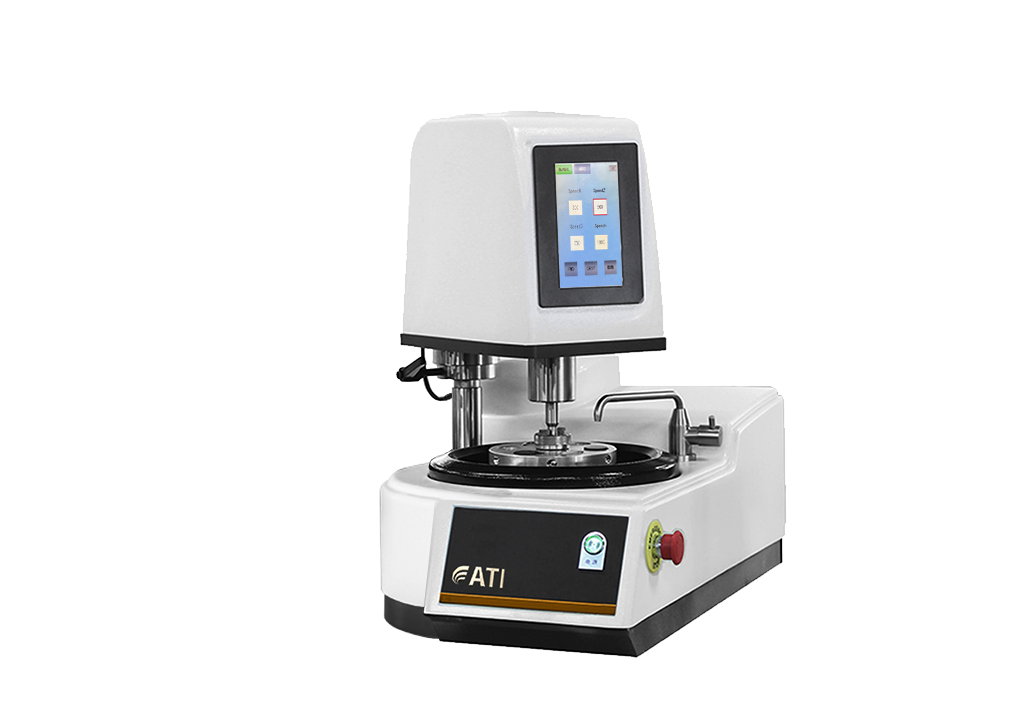
Semi-automatic double-plate metallographic polishing machine
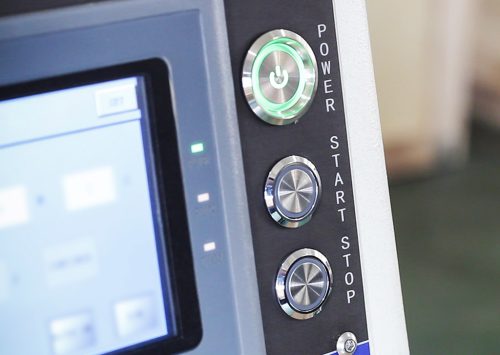
ATI POL-250 Double is a fully computerized, PLC- and AI-controlled single-plate metallographic polishing machine with a multifunction touch screen. It can accommodate up to three samples simultaneously and features three independent pressure points, each holding 300 g of weight. The rotation speeds are programmable and memorizable, with the option of clockwise and counterclockwise operation. The memory allows for saving four speeds and eight work cycles. The machine is equipped with an adjustable-flow liquid diffuser with automatic shut-off at the end of the cycle and an antistatic magnetic disc for abrasive paper, compatible with any type of abrasive paper, whether magnetic or adhesive. The special antistatic and self-cleaning treatment ensures optimal performance even when using adhesive discs.
Model:
Disc diameter (mm):
Disc rotation speed:
Oscillation frequency:
Pressure exerted on the sample:
Structure:
Protection:
Engine power:
Power supply:
Dimensions:
Weight:
ATI POL-250 Double
Ø 254mm (Ø 230, 203 and 304 mm at request)
100-1000 r/min (Forward and reverse rotation ca be switched)
9 times/min
Customizable and editable (single 300g sample)
Steel and anti-acid epoxy coating
Waterproof coating against infiltrations
0.75 W
110-220V / 50-60Hz
670 x 600 x 360 mm
70 Kg
Semi-automatic metallographic polishing machine
ATI POL-250 is a fully computerized, PLC- and AI-controlled single-plate metallographic polishing machine with a multifunction touch screen. It can accommodate up to three samples simultaneously and features three independent pressure points, each holding 300 g of weight. The rotation speeds are programmable and memorizable, with the option of clockwise and counterclockwise operation. The memory allows for saving four speeds and eight work cycles. The machine is equipped with an adjustable-flow liquid diffuser with automatic shut-off at the end of the cycle and an antistatic magnetic disc for abrasive paper, compatible with any type of abrasive paper, whether magnetic or adhesive. The special antistatic and self-cleaning treatment ensures optimal performance even when using adhesive discs.
Model:
Disc diameter (mm):
Disc rotation speed:
Oscillation frequency:
Pressure exerted on the sample:
Structure:
Protection:
Engine power:
Power supply:
Dimensions:
Weight:
ATI POL-250
Ø 254mm (Ø 230, 203 and 304 mm at request)
100-1000 r/min (Forward and reverse rotation ca be switched)
9 times/min
Customizable and editable (single 300g sample)
Steel and anti-acid epoxy coating
Waterproof coating against infiltrations
0.75 W
110-220V / 50-60Hz
670 x 470 x 360 mm
40 Kg
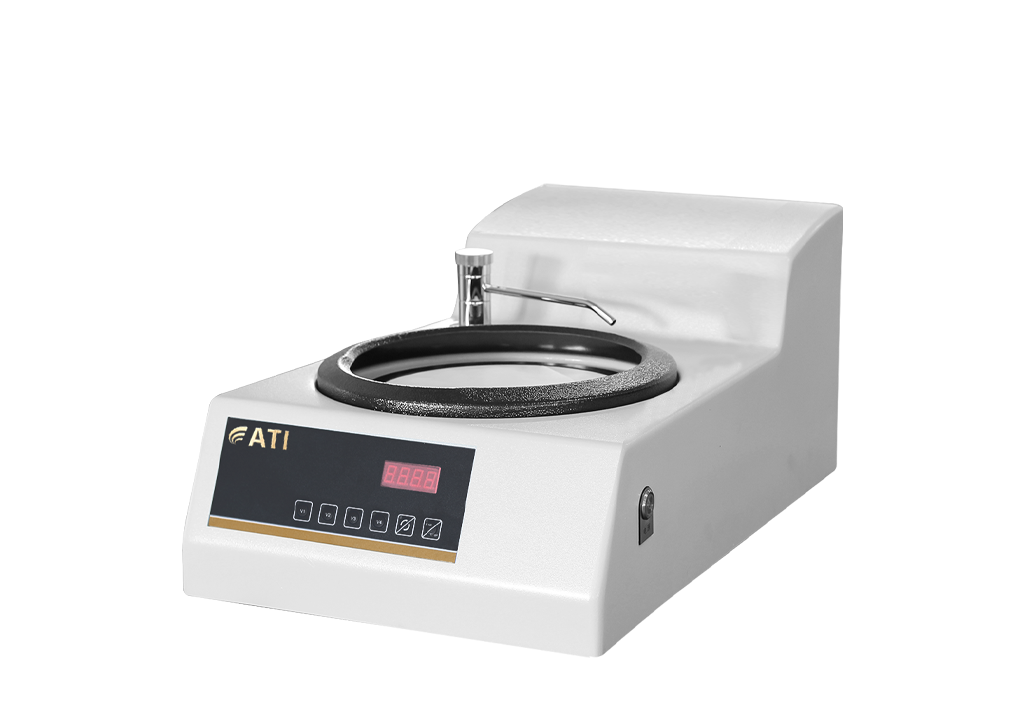
Manual double-plate metallographic polishing machine
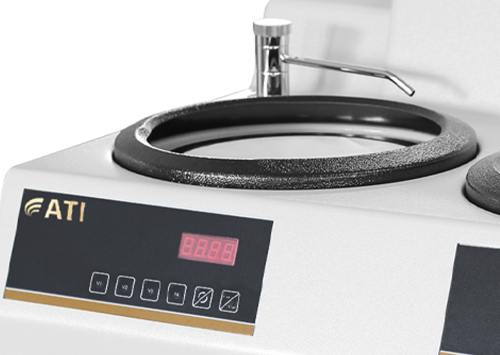
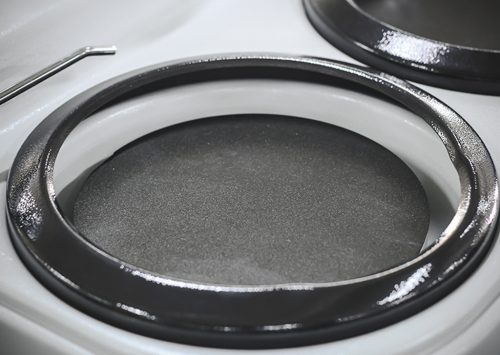
ATI POL-230 Double is a double-plate metallographic polishing machine with independent action, featuring 4 + 4 programmable and storable rotation speeds, and both clockwise and counterclockwise operation. It features a digital display, an adjustable-flow liquid diffuser with automatic shut-off at the end of the cycle, and an antistatic magnetic disc, compatible with any type of abrasive paper, both magnetic and adhesive. The special antistatic and self-cleaning treatment ensures optimal performance even when using adhesive discs.
Model:
Disc diameter (mm):
Disc rotation speed:
Direction of rotation:
Grinding speed:
Time for sample preparation:
Engine power:
Power supply:
Dimensions:
Weight:
ATI POL-230 Double
Ø 254mm (Ø 203 mm at request) with magnetic system
Left disc: V1= 150 rpm, V2= 300 rpm, V3= 600 rpm, V4= 800 rpm
Right disc: V1= 300 rpm, V2= 500 rpm, V3= 800 rpm, V4= 1000 rpm
Automatic speed of 100-1000 rpm
Counterclockwise / clockwise, one key switch
0-100 r/min
0-9999 sec
0.75 W
110-220V / 50-60Hz
670 x 710 x 340 mm
52 Kg
Manual metallographic polishing machine
ATI POL-230 is a single-plate metallographic polishing machine equipped with two programmable and storable rotation speeds, capable of operating in both clockwise and counterclockwise directions. It features a digital display, an adjustable-flow liquid diffuser with automatic shut-off at the end of the cycle, and an antistatic magnetic disc, compatible with any type of abrasive paper, both magnetic and adhesive. The special antistatic and self-cleaning treatment ensures optimal performance even when using adhesive discs.
Model:
Disc diameter (mm):
Disc rotation speed:
Lubrification:
Protection:
Control mode:
Structure:
Engine power:
Power supply:
Dimensions:
Weight:
ATI POL-230
Ø 254mm (Ø 203 mm at request) with magnetic system
V1= 500 rpm, V2= 1000 rpm
Orientable and adjustable
Waterproof coating against infiltrations
Waterproof touch-screen control panel
Steel and anti-acid epoxy coating
0.37 W
110-220V / 50-60Hz
670 x 710 x 340 mm
52 Kg
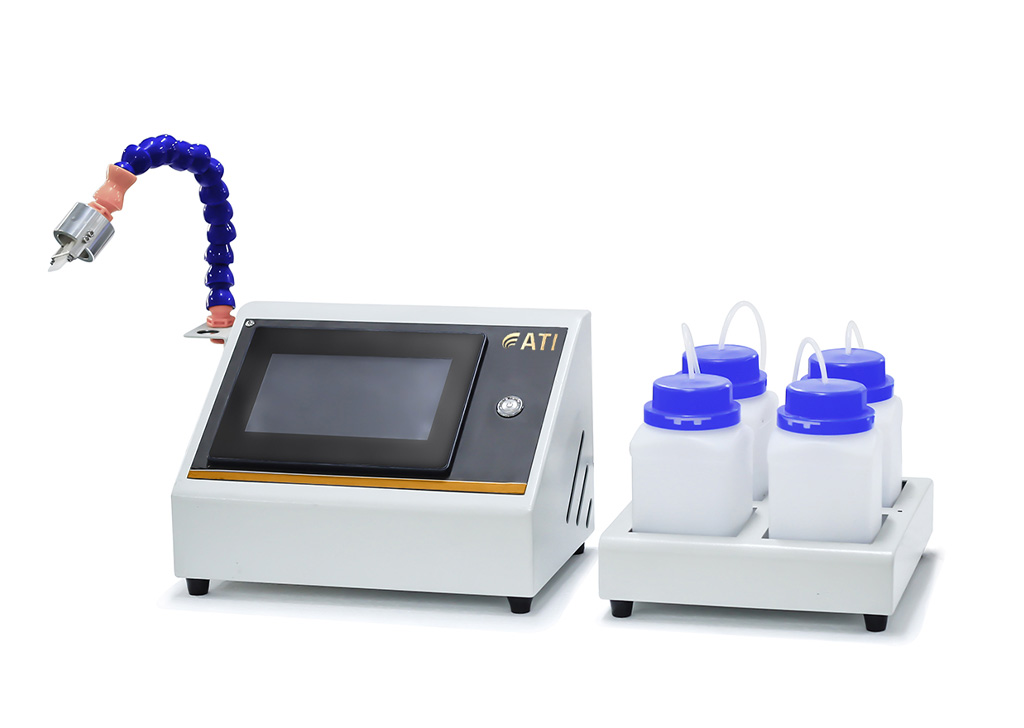
Automatic dropper with universal compatibility
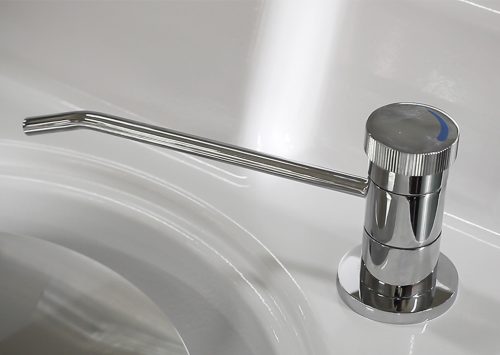
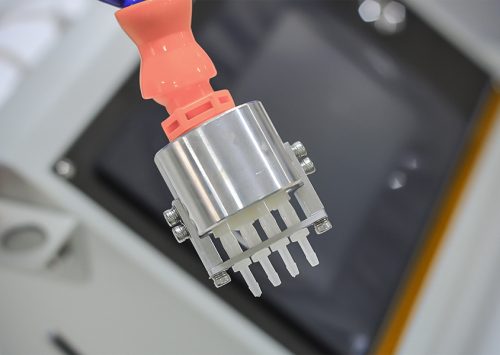
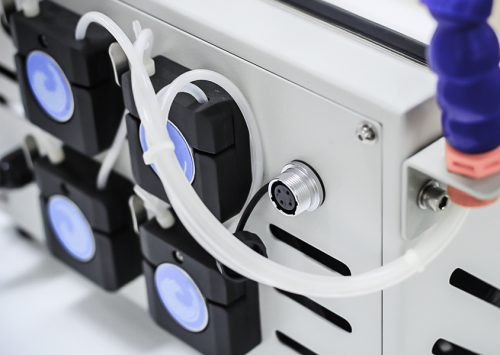
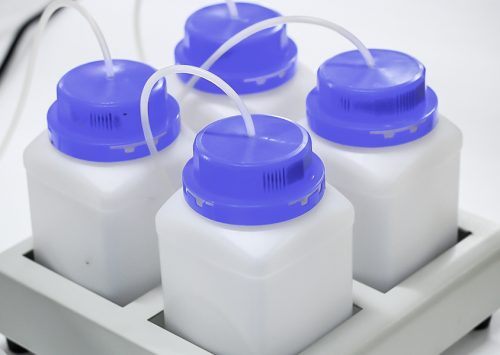
ATI POL-X can be used on various metallographic grinding and polishing machines to automatically supply the polishing liquid to the abrasive or polishing disc at the desired dripping speed, achieving optimal polishing results. The ATI POL-X is compatible with the ATI POL-1000, ATI POL-1000 Double, ATI POL-250, and ATI POL-250 Double models. When connected, the device is automatically recognized by the cycle management software, allowing fully synchronized operation with the polishing machine. The system enables automatic distribution of the abrasive or polishing liquid between the grinding plate and the loading plate, ensuring uniform and controlled polishing. Thanks to the use of an advanced microcontroller and intelligent software, the design is compact, the operation is fully autonomous, and the consumption of abrasive material is optimized, helping to improve the efficiency of the polishing cycle.
Model:
Settings:
Dripping speed:
Flow rate:
Dripping time:
Polishing mode::
Power supply:
ATI POL-X
There are 4 parameters available for cycle settings:
1) Polishing material 2) Dripping rate 3) Dripping time 4) Polishing mode
6-280 drop/min
18 ml/min
9999 min and 59.8 sec
Manual, online and fully automatic
110-220V / 50-60Hz
Hardness Testers Rockwell Brinell Vickers
We firmly believe that the internet should be available and accessible to anyone, and are committed to providing a website that is accessible to the widest possible audience, regardless of circumstance and ability.
To fulfill this, we aim to adhere as strictly as possible to the World Wide Web Consortium’s (W3C) Web Content Accessibility Guidelines 2.1 (WCAG 2.1) at the AA level. These guidelines explain how to make web content accessible to people with a wide array of disabilities. Complying with those guidelines helps us ensure that the website is accessible to all people: blind people, people with motor impairments, visual impairment, cognitive disabilities, and more.
This website utilizes various technologies that are meant to make it as accessible as possible at all times. We utilize an accessibility interface that allows persons with specific disabilities to adjust the website’s UI (user interface) and design it to their personal needs.
Additionally, the website utilizes an AI-based application that runs in the background and optimizes its accessibility level constantly. This application remediates the website’s HTML, adapts Its functionality and behavior for screen-readers used by the blind users, and for keyboard functions used by individuals with motor impairments.
If you’ve found a malfunction or have ideas for improvement, we’ll be happy to hear from you. You can reach out to the website’s operators by using the following email
Our website implements the ARIA attributes (Accessible Rich Internet Applications) technique, alongside various different behavioral changes, to ensure blind users visiting with screen-readers are able to read, comprehend, and enjoy the website’s functions. As soon as a user with a screen-reader enters your site, they immediately receive a prompt to enter the Screen-Reader Profile so they can browse and operate your site effectively. Here’s how our website covers some of the most important screen-reader requirements, alongside console screenshots of code examples:
Screen-reader optimization: we run a background process that learns the website’s components from top to bottom, to ensure ongoing compliance even when updating the website. In this process, we provide screen-readers with meaningful data using the ARIA set of attributes. For example, we provide accurate form labels; descriptions for actionable icons (social media icons, search icons, cart icons, etc.); validation guidance for form inputs; element roles such as buttons, menus, modal dialogues (popups), and others. Additionally, the background process scans all the website’s images and provides an accurate and meaningful image-object-recognition-based description as an ALT (alternate text) tag for images that are not described. It will also extract texts that are embedded within the image, using an OCR (optical character recognition) technology. To turn on screen-reader adjustments at any time, users need only to press the Alt+1 keyboard combination. Screen-reader users also get automatic announcements to turn the Screen-reader mode on as soon as they enter the website.
These adjustments are compatible with all popular screen readers, including JAWS and NVDA.
Keyboard navigation optimization: The background process also adjusts the website’s HTML, and adds various behaviors using JavaScript code to make the website operable by the keyboard. This includes the ability to navigate the website using the Tab and Shift+Tab keys, operate dropdowns with the arrow keys, close them with Esc, trigger buttons and links using the Enter key, navigate between radio and checkbox elements using the arrow keys, and fill them in with the Spacebar or Enter key.Additionally, keyboard users will find quick-navigation and content-skip menus, available at any time by clicking Alt+1, or as the first elements of the site while navigating with the keyboard. The background process also handles triggered popups by moving the keyboard focus towards them as soon as they appear, and not allow the focus drift outside it.
Users can also use shortcuts such as “M” (menus), “H” (headings), “F” (forms), “B” (buttons), and “G” (graphics) to jump to specific elements.
We aim to support the widest array of browsers and assistive technologies as possible, so our users can choose the best fitting tools for them, with as few limitations as possible. Therefore, we have worked very hard to be able to support all major systems that comprise over 95% of the user market share including Google Chrome, Mozilla Firefox, Apple Safari, Opera and Microsoft Edge, JAWS and NVDA (screen readers).
Despite our very best efforts to allow anybody to adjust the website to their needs. There may still be pages or sections that are not fully accessible, are in the process of becoming accessible, or are lacking an adequate technological solution to make them accessible. Still, we are continually improving our accessibility, adding, updating and improving its options and features, and developing and adopting new technologies. All this is meant to reach the optimal level of accessibility, following technological advancements. For any assistance, please reach out to